

A move-in clean is a top-to-bottom deep clean of a house or apartment before your furniture arrives. Start with the kitchen and bathrooms, clean each room from the ceiling down, wipe inside every cabinet and drawer, clean the appliances inside and out, and finish with the floors. A typical home takes one person several hours to a full day, depending on its size and condition.
The keys are in your hand, the rooms are empty, and it’s tempting to start carrying boxes in right away. Don’t. That empty house is the easiest it will ever be to clean.
On move-in cleans we do around Plano, even homes that look spotless at the showing usually have the same surprises: crumbs and grease behind the stove, a sticky film inside the kitchen cabinets, dust on every ceiling fan blade, and hair tucked behind the toilet. None of it is visible until you look. This checklist walks you through where to look, what to use, and what order to do it in.
Want it on paper? Download the free printable move-in cleaning checklist (PDF) and check things off as you go.
Do You Really Need to Clean Before Moving In?
If you want to do it once and do it right, yes. “Move-in ready” means the house is livable, not that anyone scrubbed the inside of the oven. And you have no idea how the last people cleaned, or if they did at all.
A few reasons it’s worth the effort:
- Other people’s dirt is hiding in plain sight. Pet hair in carpet, grease on the range hood, soap scum in the shower, and dust on top of every door frame.
- It will never be this easy again. Once the couch, the bed, and the boxes are in, you’ll be cleaning around them for years.
- You’ll catch problems early. Cleaning every corner is how people find a slow leak under the sink, signs of mice in the pantry, or mildew behind the shower curtain, while the seller or landlord may still be responsible.
- New builds are dusty too. Construction dust from drywall and sawdust settles in drawers, on shelves, and in vents, and it keeps coming back until it’s properly removed.
Before You Start: 4 Things to Do First
- Take photos and video of every room. If you’re renting, this protects your security deposit. If you bought, it’s a record of anything the seller should have fixed.
- Check what’s already covered. Some leases and sales contracts require a professional clean before you get the keys. Ask before you spend a weekend doing it yourself.
- Clean after the work, not before. If painters, flooring installers, or handymen are coming, schedule the deep clean after they leave, or you’ll be cleaning twice.
- Swap the HVAC air filter on day one. You don’t know how old the current one is, and a fresh filter keeps dust from blowing back onto the surfaces you just cleaned.
What You’ll Need
Get everything together before you start. Nothing kills momentum like running to the store halfway through the kitchen.
- Cleaners: all-purpose spray, a kitchen degreaser, glass cleaner, a disinfectant for the bathrooms and high-touch spots, and a bathroom or tile cleaner.
- Tools: microfiber cloths (a lot of them), a vacuum with a crevice tool and brush attachment, a mop and bucket, scrub brushes in a couple of sizes, a non-scratch sponge, gloves, trash bags, and a step stool.
- Handy extras: baking soda for scrubbing ovens and sinks, a magic eraser for scuffs on walls, and shelf liners if you want them.
One note on vinegar: it’s great for glass and light hard water spots, but it isn’t a registered disinfectant. For bathrooms and kitchen counters, use a product labeled as a disinfectant and follow the contact time on the label. If you move into an area with hard water, our guide to removing hard water stains will come in handy.
The Best Order to Clean a New Home
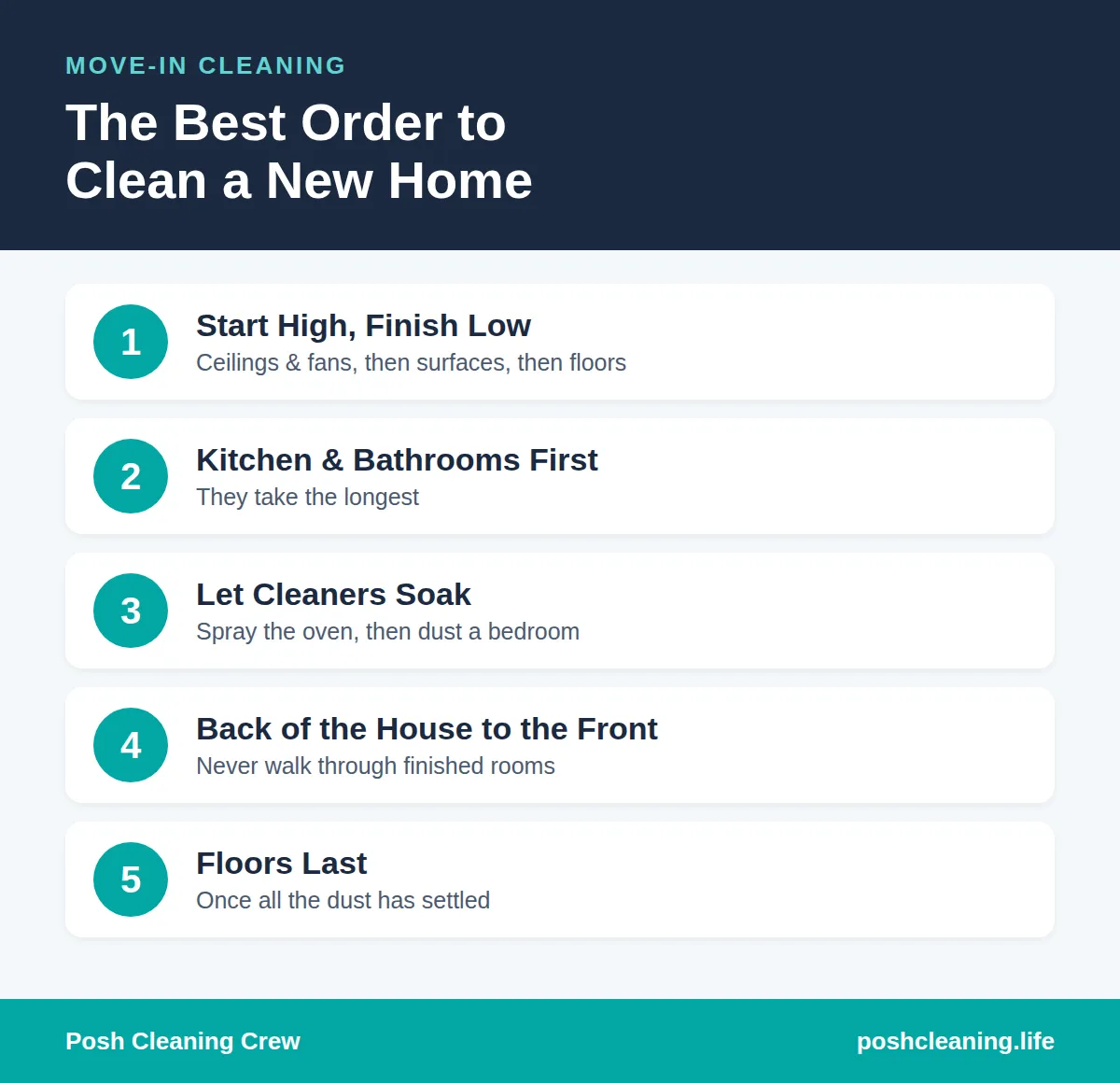
Order matters more than people think. Do it in this sequence and you won’t end up re-cleaning anything:
- Start high, finish low. In every room, dust ceilings, fans, and light fixtures first, then walls and surfaces, then floors.
- Do the kitchen and bathrooms first. They take the longest and need products time to sit.
- Let cleaners soak while you work elsewhere. Spray the oven and shower, then go dust a bedroom.
- Work from the back of the house toward the front door. You won’t walk through rooms you’ve already finished.
- Save floors for last, once the whole house is done and the dust has settled.
Room-by-Room Move-In Cleaning Checklist
Every Room
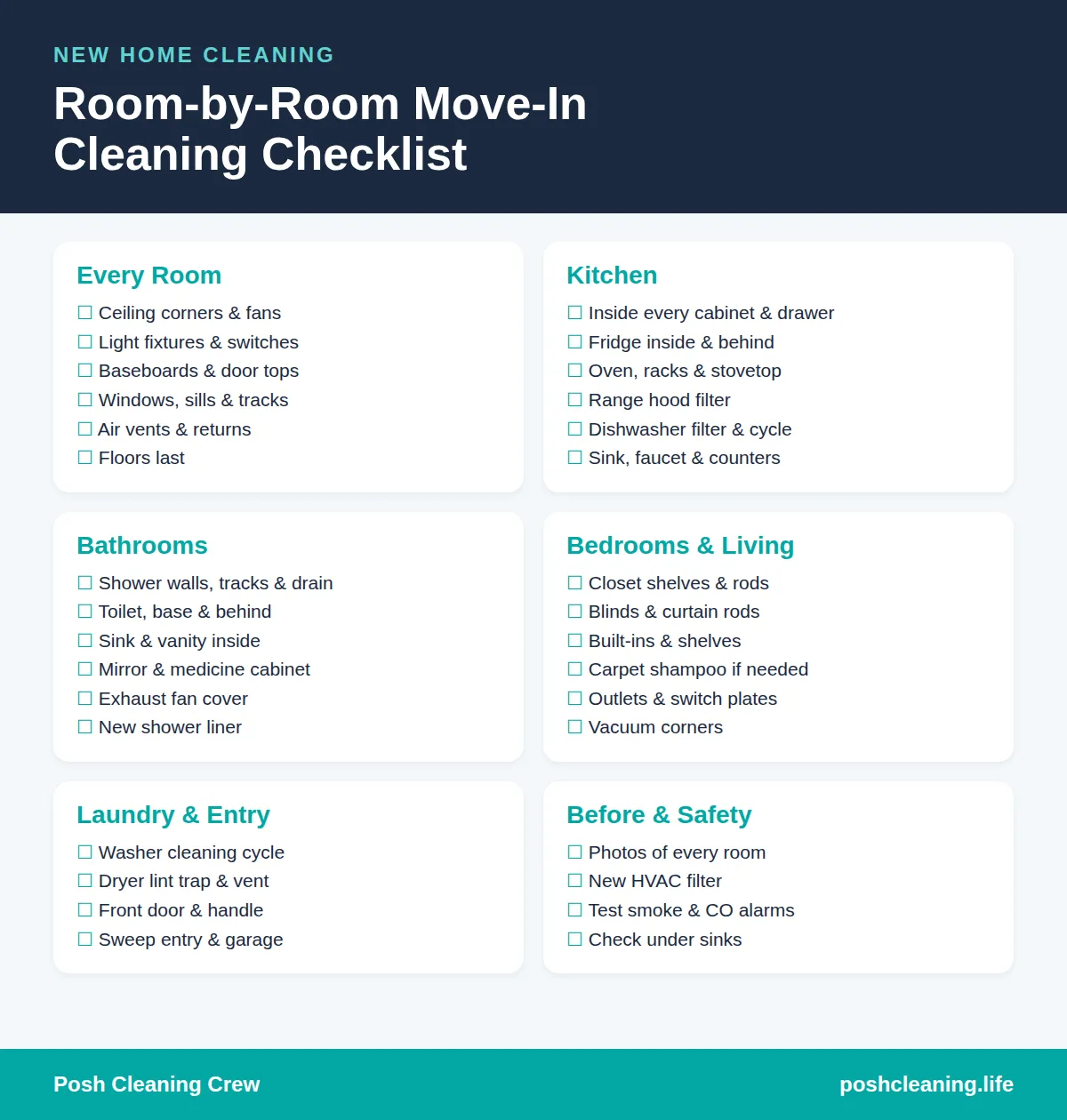
- Dust cobwebs from ceiling corners, then dust ceiling fans and light fixtures.
- Wipe walls where you see scuffs or fingerprints, especially around light switches.
- Wipe baseboards, door frames, and the tops of doors (they’re almost always dusty).
- Clean window glass, sills, and tracks. Tracks collect a surprising amount of dirt and dead bugs.
- Wipe and disinfect light switches, outlet covers, and doorknobs.
- Vacuum air vents and return grilles.
- Vacuum carpets slowly, or mop hard floors, and get into the corners.
Kitchen
This is the room that takes the longest, and it’s where you’ll be storing food, so give it real time.
- Cabinets and drawers: Wipe the inside, outside, and top of every one. Kitchen cabinets often have a sticky film of old cooking grease that a degreaser cuts right through.
- Refrigerator: Pull out the shelves and drawers and wash them in the sink. Wipe the inside, the door seals, and the top. If you can, slide the fridge out and clean behind and under it.
- Oven and stovetop: Soak the racks and burner grates, apply oven cleaner or a baking soda paste inside, and let it sit while you work on something else. Don’t forget the knobs and the drawer under the oven.
- Range hood: Soak the metal filter in hot, soapy water and degrease the hood itself.
- Dishwasher: Clean the filter at the bottom, wipe the door edges, and run an empty hot cycle with dishwasher cleaner.
- Microwave: Heat a bowl of water with a splash of vinegar for two minutes, then wipe it out.
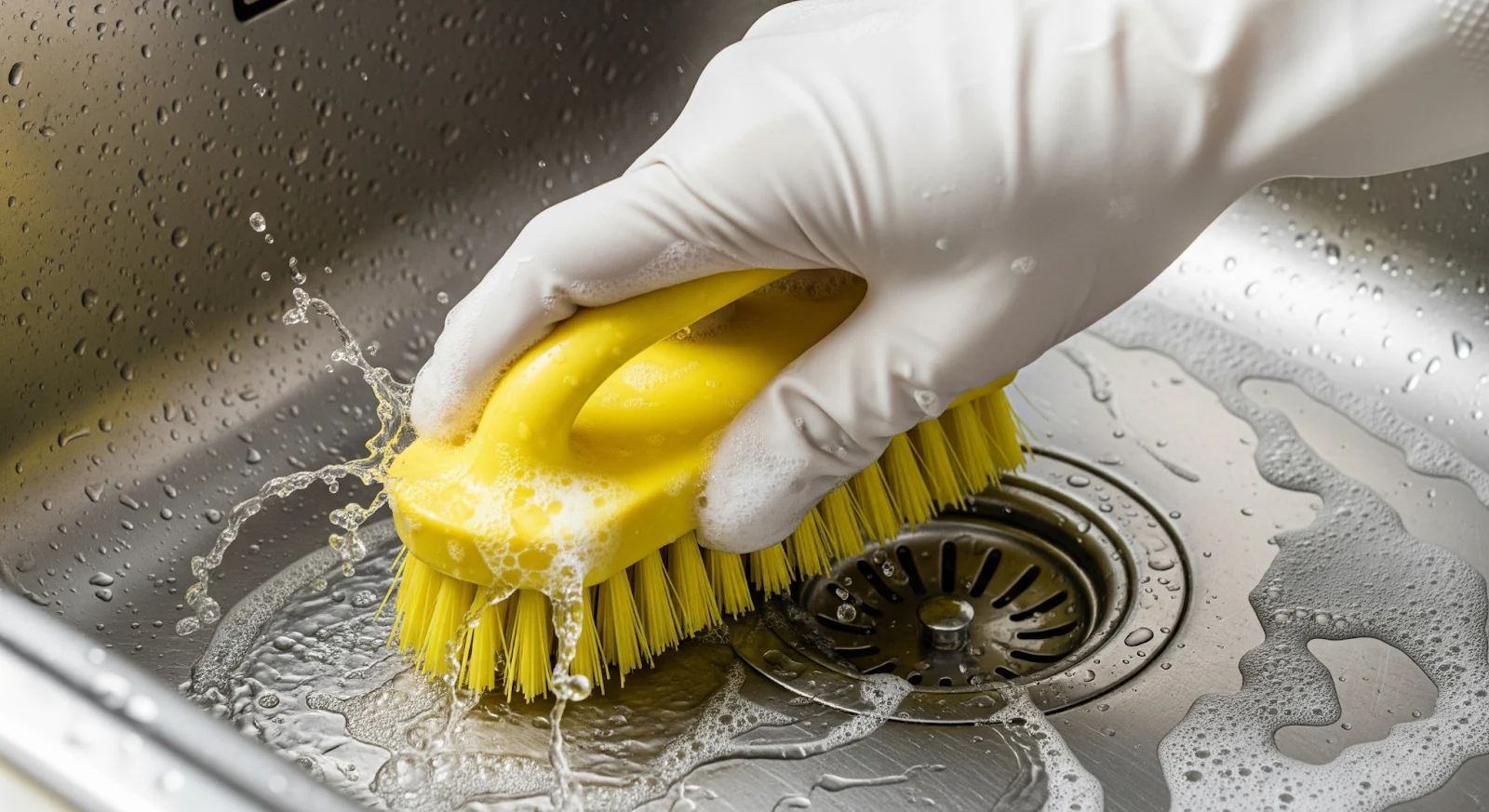
- Sink and counters: Scrub the sink, clean around the faucet base, and disinfect the countertops last.
Bathrooms
Bathrooms are the room people feel most strongly about. Nobody wants to shower in someone else’s soap scum.
- Shower and tub: Spray, let it sit, and scrub the walls, floor, door tracks, and fixtures. Pull hair out of the drain. If the grout is stained, our guide to grout cleaning explains what actually works.
- Toilet: Clean inside the bowl, then the seat, hinges, tank, handle, and the base and floor behind it. That back corner is where the hair hides.
- Sink and vanity: Scrub the sink, clean around the faucet, and wipe out the drawers and cabinet underneath.
- Mirror and medicine cabinet: Clean the glass and wipe out the shelves.
- Exhaust fan: Pop off the cover if you can and wash it. A dusty fan barely moves air, which means more mildew.
- Replace: Buy a new shower curtain liner and toilet seat if the old ones look questionable. It’s cheap peace of mind.
Bedrooms and Living Areas
- Closets: Wipe the shelves, the rod, and the floor. Check corners for anything the last people left behind.
- Blinds and curtain rods: Dust blinds slat by slat, or wipe them with a damp microfiber cloth.
- Built-ins and shelves: Wipe them inside and out before your books and decor go up.
- Carpet: If the previous owners had pets or you notice stains or odors, book a professional carpet shampooing before your furniture goes down. It’s far harder to do later.
Laundry Room, Entry, and Garage
- Washer: Run an empty hot cycle with washer cleaner, wipe the door seal on front-loaders, and leave the door open to dry.
- Dryer: Clean the lint trap and the slot it sits in. Ask when the dryer vent was last cleaned, since built-up lint in the vent is a fire risk.
- Entry and garage: Sweep the entry, wipe the front door and handle, and sweep out the garage before you start storing boxes there.
Quick Safety Checks While You Clean
- Test every smoke detector and carbon monoxide detector, and replace the batteries.
- Look under every sink for drips or water stains.
- Keep an eye out for droppings, gnaw marks, or insects in cabinets, closets, and the garage.
How Long Does Move-In Cleaning Take?
It depends on the size of the home and how it was left. Here are realistic ranges for one person doing a thorough job:
| Home Size | Light Condition | Needs Heavy Cleaning |
| Studio / 1 bedroom | 3–4 hours | 5–6 hours |
| 2–3 bedrooms | 5–7 hours | 8–10 hours |
| 4+ bedrooms | 8–10 hours | A full day or more |
Two people cut the time roughly in half. The oven, the fridge, and the showers are usually the slowest jobs, so start them early.
Moving Into a New Construction Home? It’s Different
New homes aren’t dirty in the usual way, but construction dust is its own problem. It’s very fine, it gets everywhere, and it keeps coming back.
- Vacuum with a HEPA vacuum, since regular vacuums can blow the finest dust back into the air.
- Wipe every surface twice: once to pick up the dust, and again a day or two later when more has settled.
- Vacuum inside every cabinet, drawer, and closet, and wipe window tracks and sills.
- Remove leftover stickers, tape, paint drips, and grout haze with the right product for each surface.
- Replace the HVAC filter again after a few weeks. It fills up fast in a new build.
Should You Hire a Professional Move-In Cleaner?
Doing it yourself saves money, and with this checklist you can absolutely do a great job. But moving week is already a lot. Between packing, utilities, and the truck, most people don’t have a spare full day to scrub someone else’s oven.
A professional clean makes sense when:
- You’re moving on a tight timeline and need the home ready the day you get the keys.
- The home was left in rough shape, or had pets or smokers.
- It’s a large home, or you’re moving in with kids and don’t want to clean with them underfoot.
- You want extras done at the same time, like carpet shampooing or cold fogging after a home with a known illness.
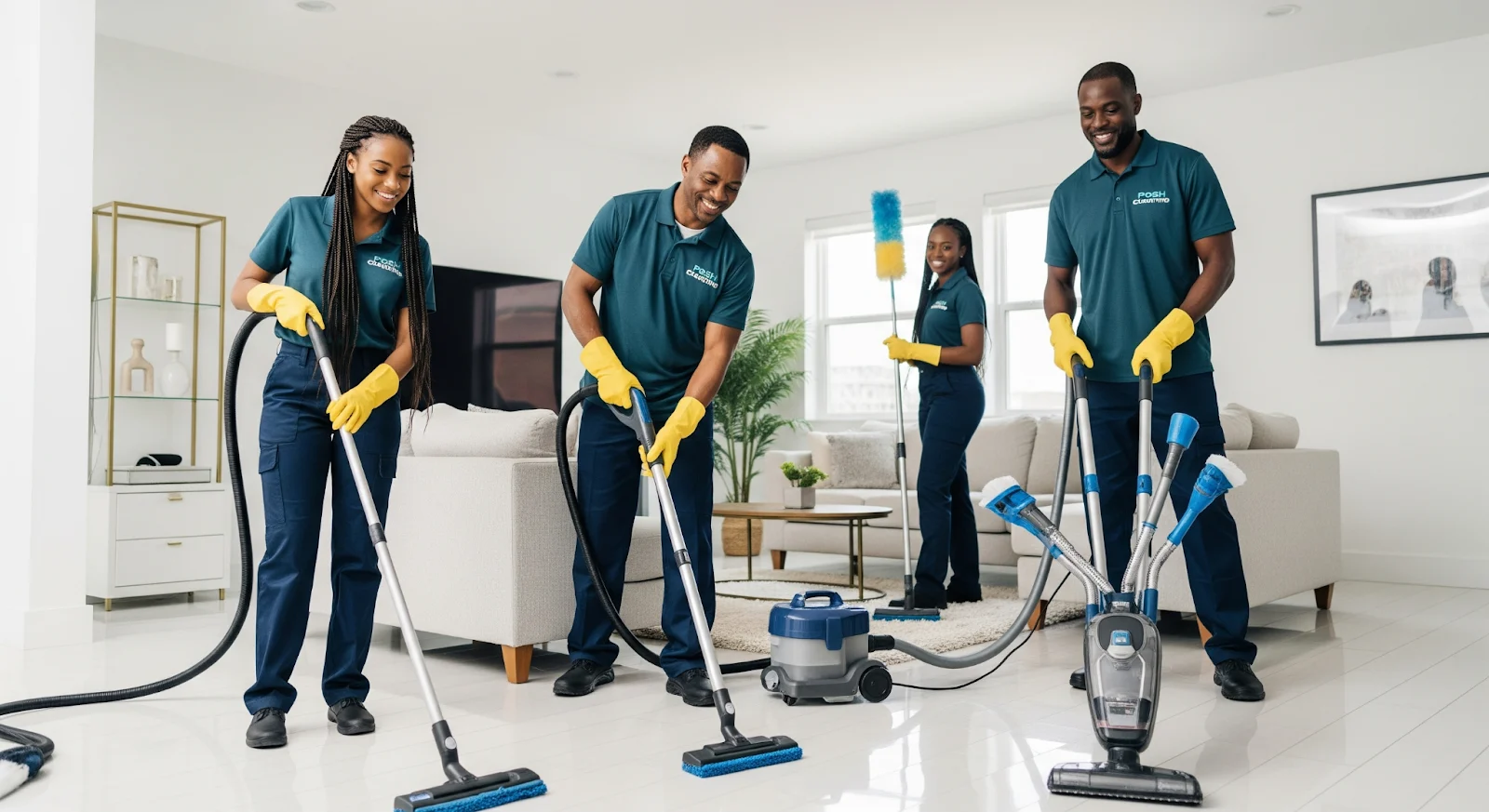
Is a move-in cleaning service worth the cost?
For most people, it comes down to time. If a pro can finish in a few hours what would take you a weekend, and you have movers to meet and boxes to unpack, it usually pays for itself in stress saved. If the home is small, in good shape, and you have the time, doing it yourself with this list is a perfectly good choice.
Start Fresh with Posh Cleaning Crew
Posh Cleaning Crew is a woman-owned, veteran-operated cleaning company that handles move-in cleans in Texas and Pennsylvania. We go through every item on this list, including the inside of every cabinet, the oven, and behind the fridge, so your new place is ready the day you move in.
- Move-in cleaning in Texas (Plano and surrounding areas)
- Move-in cleaning in Pennsylvania (Aston and surrounding areas)
Leaving your old place too? Grab our move-out cleaning checklist so you get your deposit back.
Ready to move into a clean home? Request a free quote or call (210) 891-0224.
Frequently Asked Questions
Should I clean before or after moving in?
Before. An empty home is much faster and easier to clean, and you can reach inside cabinets, behind appliances, and under where furniture will sit. If contractors are doing work, clean after they finish.
What is the difference between a move-in clean and a regular clean?
A regular clean keeps a home tidy: dusting, vacuuming, and wiping surfaces. A move-in clean is a deep clean of an empty home, including the inside of cabinets, drawers, and appliances, baseboards, vents, window tracks, and behind the fridge and stove.
Is the landlord supposed to clean before I move in?
Many landlords clean or hire cleaners between tenants, but the standard varies and depends on your lease and local rules. Take photos on move-in day either way, so you have a record of the condition.
Do I need to disinfect a new home?
Disinfect the spots people touch and the bathrooms: doorknobs, light switches, faucet handles, toilets, and kitchen counters. For a whole-home reset, such as after a previous occupant was sick, professional disinfection is an option.