

Grout stays dirty after scrubbing because it is porous, so dirt, soap scum, and minerals soak below the surface. DIY cleaning with a pH-neutral or oxygen-based cleaner and a nylon brush works for light, recent stains. Deep, set-in discoloration usually needs professional cleaning with hot water extraction, followed by sealing so the grout stays clean longer.
If you have ever spent a Saturday on your knees scrubbing grout, only to watch the lines turn gray again a few weeks later, you are not doing it wrong. Grout is simply built to soak things up.
This guide explains why grout gets so dirty, when DIY cleaning is enough, how professionals deep-clean and seal grout, and how to decide if paying for it is worth it in your home.
Why Grout Gets Dirty and Stays Dirty
Most grout is made from cement, sand, and water. Unlike glazed ceramic or porcelain tile, it is full of tiny pores that act like a sponge. Every mop bucket of dirty water, every shower of soapy water, and every spill soaks in a little deeper. In Texas homes, hard water adds another layer: mineral deposits that leave grout looking cloudy or crusty, especially in showers.
Why Isn’t My Grout Getting Clean with Bleach and Scrubbing?
Two reasons. First, a brush only reaches the top layer of the grout, while most of the dirt is trapped below it. Second, the harsh products people reach for can make the problem worse:
- Bleach can lighten stains on the surface, but repeated use wears down cement grout and can fade colored grout unevenly.
- Vinegar and other acids slowly dissolve cement-based grout and can etch natural stone like marble and travertine.
- Mixing cleaners is dangerous. Never combine bleach with ammonia or acidic cleaners; the fumes are toxic.
The result is grout that looks better for a week, then gets dirty faster because it is now even more porous.
The Professional Grout Cleaning Process
Professional grout cleaning is a systematic service designed to safely and effectively restore grout to its original condition. Rather than relying on brute force, trained technicians use a combination of specialized solutions and equipment to achieve a deep, hygienic clean that is impossible to replicate with DIY methods. The process at companies like Posh Cleaning Crew is methodical and targets the root cause of discoloration.
When DIY Grout Cleaning Is Enough
DIY cleaning works well for light, recent discoloration and small areas like a backsplash or a single shower wall. Here is a safe method that won’t damage most grout:
1.Sweep or vacuum loose dirt from the grout lines first.
2.Apply a cleaner: a paste of baking soda and water, or an oxygen-based cleaner (not chlorine bleach) mixed according to its label.
3.Let it sit for 5 to 10 minutes so it can loosen the dirt.
4.Scrub gently with a stiff nylon grout brush. Avoid wire brushes, which scratch tile and wear grout.
5.Rinse with clean water and wipe up the dirty water right away so it doesn’t soak back in.
6.Dry the area with a towel or fan.
If the grout still looks dark after two rounds, the stain is below the surface, and more scrubbing will only wear the grout down.
DIY vs. Professional Grout Cleaning at a Glance
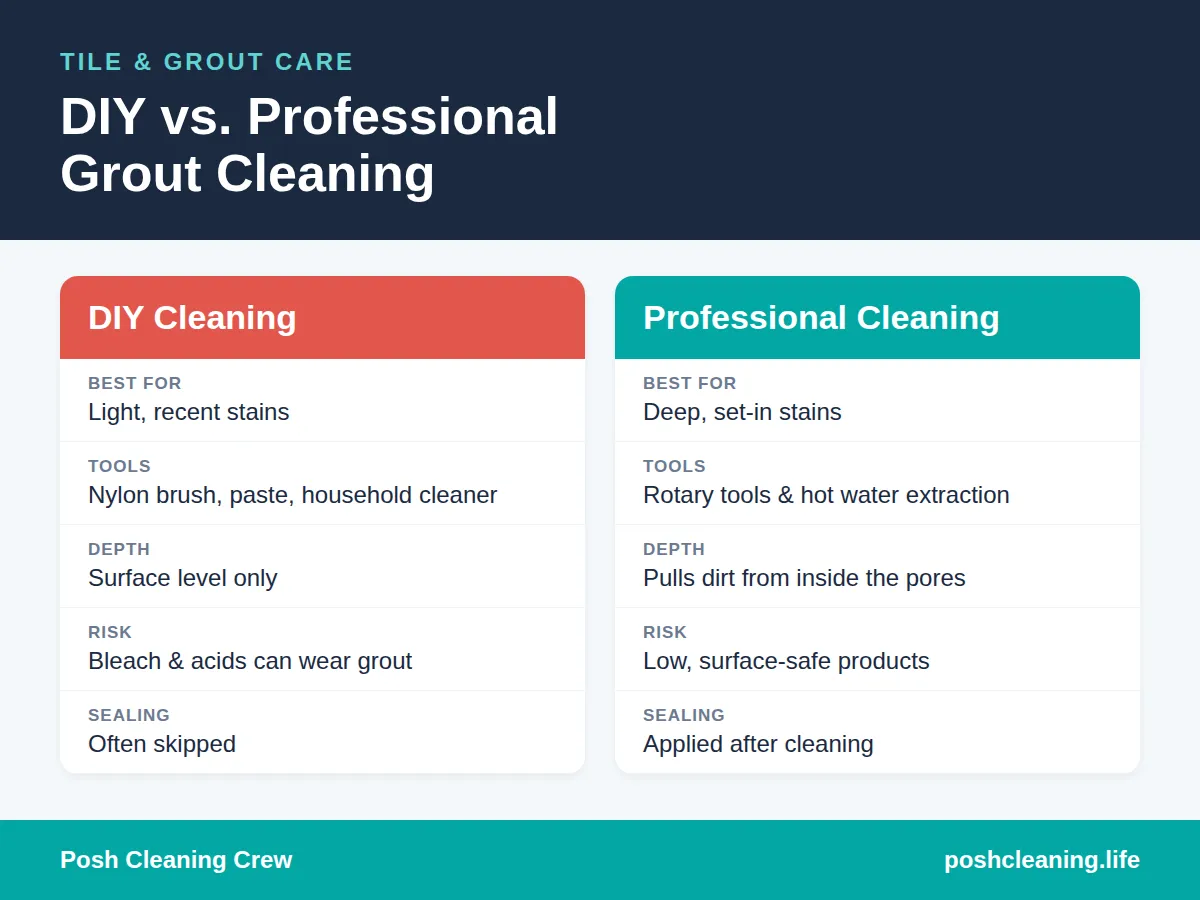
| Factor | DIY Cleaning | Professional Cleaning |
| Best for | Light, recent stains; small areas | Deep, set-in stains; floors and full showers |
| Equipment | Brush, paste, household cleaners | Rotary tools, hot water extraction, pro-grade cleaners |
| Depth of clean | Surface level | Pulls dirt from inside the pores |
| Time | Several hours on your knees | Usually a few hours, done for you |
| Risk of damage | Higher with bleach, acids, or wire brushes | Low when the right products are used |
| Sealing | Optional, often skipped | Usually offered right after cleaning |
How Professionals Deep-Clean Grout
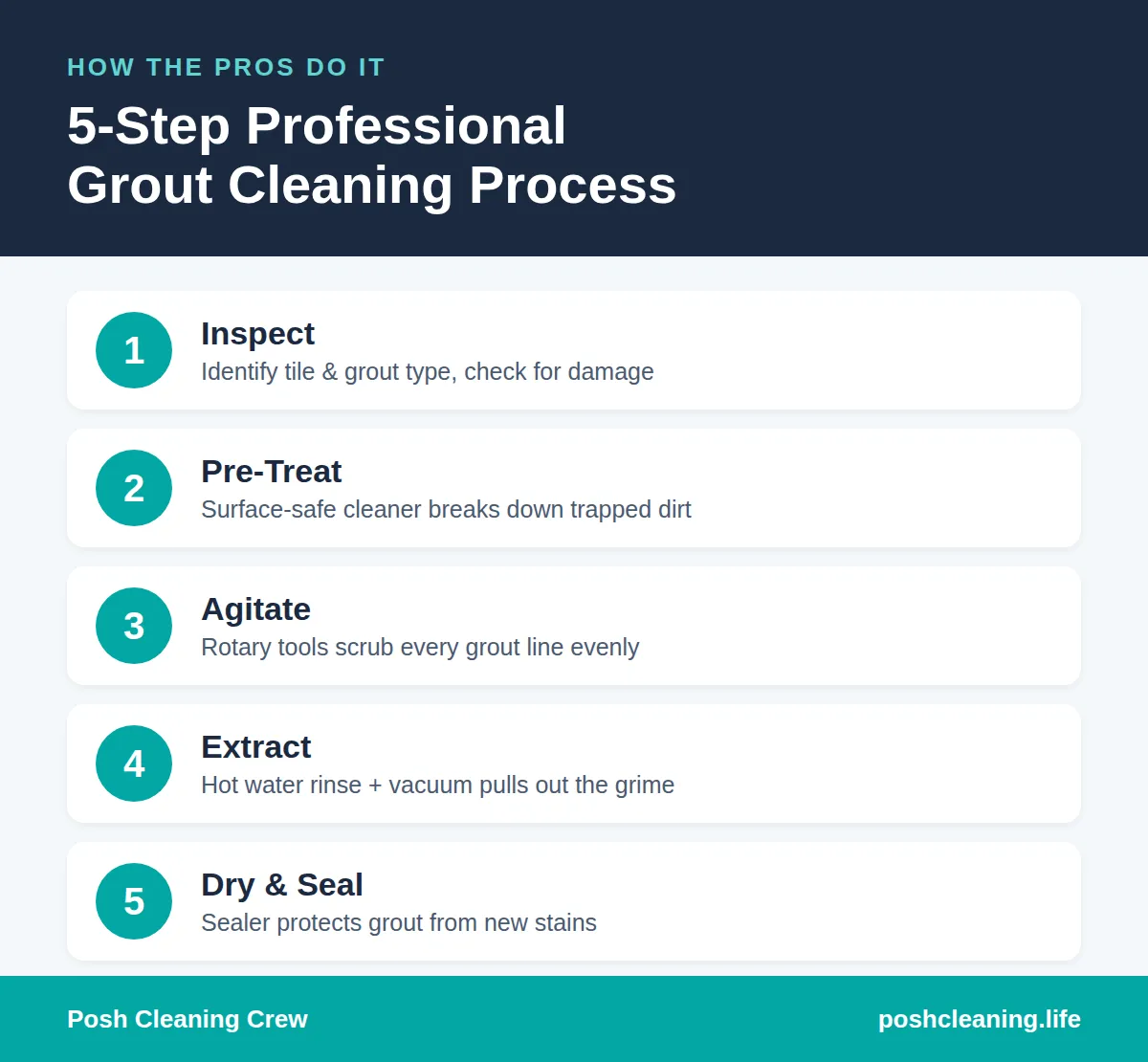
Professional grout cleaning replaces elbow grease with the right chemistry and equipment. A typical service follows five steps:
1.Inspection: The technician identifies the tile and grout type, tests for loose or cracked grout, and chooses products that are safe for that surface, especially for natural stone.
2.Pre-treatment: A professional-grade cleaner, matched to the surface, is applied and left to dwell so it can break down dirt, grease, and soap scum inside the pores.
3.Agitation: A rotary brush or grout tool scrubs every line evenly, loosening grime without the scratching a wire brush can cause.
4.Hot water extraction: Heated water rinses the grout while a powerful vacuum pulls the dirty water and residue out at the same time, instead of leaving it on the floor.
5.Drying and sealing: Once the grout is dry, a sealer is applied to protect the clean result.
Grout Sealing: The Step Most Homeowners Skip
Cleaning makes grout look new. Sealing is what keeps it that way. A grout sealer soaks into the pores and makes the grout water-resistant, so spills and dirty water sit on top long enough to be wiped away instead of soaking in.
What Are the Benefits of Sealing Grout?
- Stain resistance: Coffee, wine, and dirty mop water can be wiped up before they stain.
- Easier cleaning: Dirt stays on the surface, so a pH-neutral cleaner and a mop do most of the work.
- Less mildew in showers: Sealed grout absorbs less water, which gives mildew less to grow on.
- Longer-lasting grout: Less moisture soaking in means less cracking and crumbling over time.
How Can You Tell If Your Grout Needs Sealing?
Try the water drop test. Put a few drops of water on a grout line and wait a few minutes. If the grout darkens or the water soaks in, it needs sealing. If the water beads up, the sealer is still working.
How Long Does Grout Sealer Last?
It depends on the product and how much traffic or water the area gets. Many penetrating sealers last one to three years on floors, while showers usually need resealing more often. Test with water once or twice a year and reseal when the drops start soaking in.
When Cleaning Isn’t Enough: Recoloring or Regrouting
Some grout problems can’t be cleaned away:
- Permanent discoloration: If the grout is clean but still blotchy, a grout colorant can give it an even, uniform color and seal it at the same time.
- Cracked, crumbling, or missing grout: Damaged grout lets water behind the tile and needs to be removed and replaced.
- Soft or sandy grout: If grout rubs away when you scrub it, it has broken down and should be replaced, not cleaned.
A good technician will tell you during the inspection if your grout needs repair instead of cleaning.
How Often Should Grout Be Cleaned and Sealed?
For most homes, a professional deep clean every 12 to 18 months keeps floors in good shape, with busy kitchens, entryways, and showers sometimes needing it sooner. Reseal whenever the water drop test shows water soaking in.
Between deep cleans, these habits make a big difference:
- Sweep or vacuum tile floors often so grit doesn’t grind into the grout.
- Mop with a pH-neutral tile cleaner and change the mop water when it looks dirty.
- Squeegee shower walls after use and run the bathroom fan. In areas with hard water, hard water stain removal can clear mineral buildup from glass and fixtures.
- Wipe up spills right away, especially coffee, wine, and oil.
Restore Your Tile and Grout with Posh Cleaning Crew
Posh Cleaning Crew is a woman-owned, veteran-operated cleaning company that offers tile and grout cleaning and sealing in Texas and Pennsylvania. We inspect your tile first, use products that are safe for your surface, and seal the grout so the results last.
- Grout cleaning in Texas (Plano and surrounding areas)
- Grout cleaning in Pennsylvania (Aston and surrounding areas)
Ready to stop scrubbing? Request a free quote or call (210) 891-0224.
Frequently Asked Questions
Can bleach damage grout?
Yes. Occasional use on white grout is usually fine, but regular bleach use can wear down cement grout, make it more porous, and fade colored grout unevenly. An oxygen-based or pH-neutral cleaner is a safer choice.
Is vinegar safe for cleaning grout?
Vinegar is acidic, so regular use can slowly break down cement-based grout and damage natural stone tile. It is best avoided for routine grout cleaning.
How long after cleaning can you seal grout?
Grout must be completely dry before sealing. After a wet cleaning, that is often about 24 hours, though professionals may speed up drying with fans and seal the same day once the grout tests dry.
Does sealing make grout waterproof?
No. Sealing makes grout water-resistant, not waterproof. It slows down how fast water and stains soak in, which gives you time to wipe them away.