

Hard water stains and limescale are minerals, mostly calcium and magnesium, left behind when water dries. White vinegar dissolves light buildup on glass, chrome, toilets, and ceramic tile. Keep it away from natural stone and specialty finishes, and dry surfaces after cleaning so the spots don’t come right back. If glass stays cloudy after a good clean, it may be etched, which is a job for a professional.
You scrub the shower door on Saturday, and by Wednesday the white spots are back. If that sounds familiar, you’re not cleaning wrong. You’re fighting your water.
We see it in almost every bathroom we clean around Plano: a chalky ring at the base of the faucet, a showerhead that sprays sideways, a haze on the glass that no spray seems to touch. It’s all the same problem. The good news is that most of it comes off with things you already have under the sink, as long as you match the cleaner to the surface.
What Causes Hard Water Stains?
Hard water is just water carrying a lot of dissolved minerals, mainly calcium and magnesium. When a drop dries on your faucet, the water evaporates and the minerals stay put. One drop doesn’t matter. A few months of showers do.
The U.S. Geological Survey measures hardness in milligrams per liter (mg/L) of calcium carbonate:
| Hardness Level | mg/L (as calcium carbonate) | What You’ll Notice |
| Soft | 0–60 | Little or no buildup |
| Moderately hard | 61–120 | Some spotting on glass and fixtures |
| Hard | 121–180 | Regular white spots and soap scum |
| Very hard | Over 180 | Heavy limescale and fast buildup |
A lot of Texas sits on the harder end of that scale, and Pennsylvania varies a lot from town to town. If you want your exact number, look up your city’s annual water quality report. It’s usually a two-minute search.
Why won’t regular cleaners remove hard water stains?
Because they’re working against chemistry. Mineral deposits are alkaline, and so are most soaps and all-purpose sprays, so they slide right over the buildup. You need a mild acid, like vinegar or a descaler, to actually dissolve it. That’s also why shower walls get so gross: hard water reacts with soap and forms soap scum, so you’re often dealing with both at once.
Before You Start: 4 Rules That Save You From Expensive Mistakes
We’ve been called in after more than one DIY attempt went wrong, so these are worth a quick read:
- Never mix vinegar or any acid with bleach. It releases chlorine gas. Use one, rinse well, and only then use the other.
- Keep acids off natural stone. Vinegar and lemon juice will dull and etch marble, travertine, and many granites. The damage looks like a permanent water ring.
- Test specialty finishes first. Matte black, brushed gold, bronze, and some nickel finishes can discolor. Try a hidden spot, or check the manufacturer’s care page.
- Open a window and wear gloves. Especially with store-bought descalers, which are stronger than vinegar.
How to Remove Hard Water Stains from Every Surface
These methods handle light to moderate buildup. Whatever you’re cleaning, finish the same way: rinse with clean water and dry it. Skipping that last step is the number one reason spots come back within days.
Faucets and Fixtures
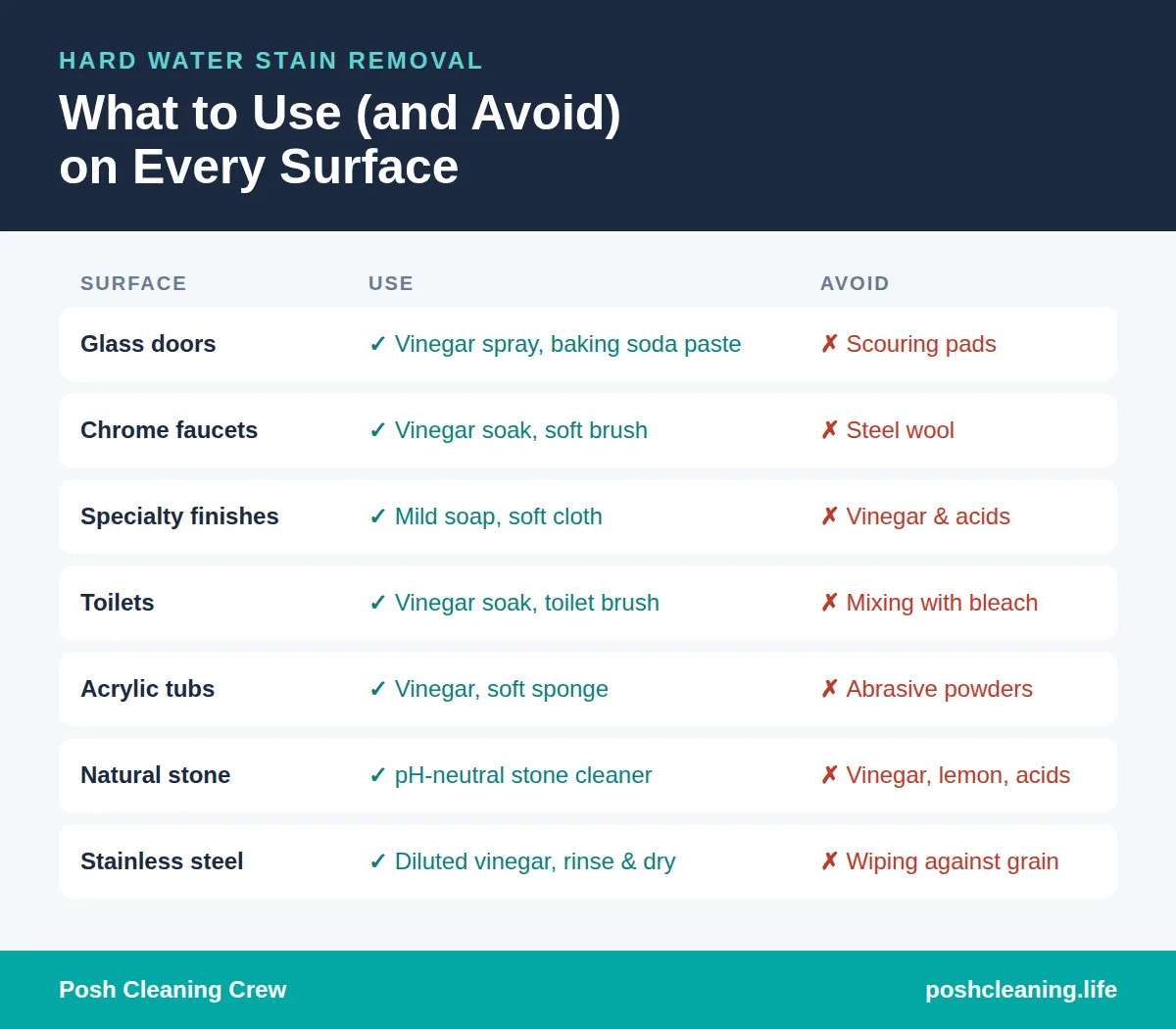
Soak a cloth or paper towel in white vinegar and wrap it around the faucet, especially the base where the crust likes to build. Leave it for 30 to 60 minutes, then scrub with an old toothbrush and buff dry. For brass, bronze, or matte black, skip the vinegar and use warm water, a drop of dish soap, and a soft cloth.
Showerheads
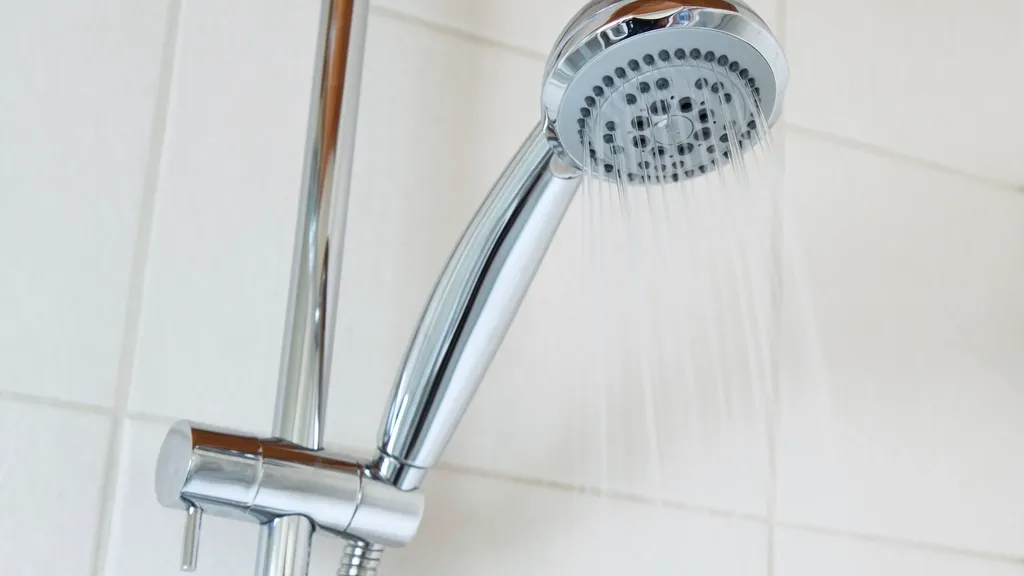
This is the one people are always surprised by. Fill a sandwich bag with vinegar, tie it over the showerhead with a rubber band so the nozzles are underwater, and leave it for an hour, or overnight if the spray is really weak. Pull the bag off, run hot water for a minute, and brush out anything left. If your showerhead has rubber nozzles, rub them with your thumb and the scale pops right out.
Glass Shower Doors
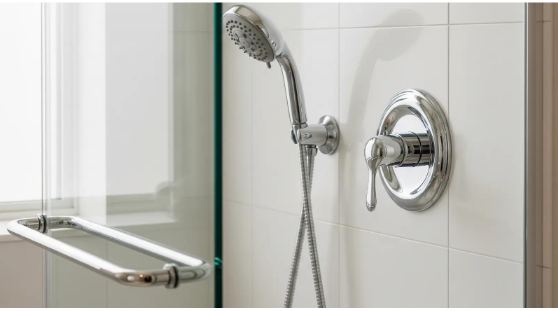
Warm up equal parts white vinegar and water (a few seconds in the microwave helps), spray the glass, and give it 10 to 15 minutes. Wipe with a non-scratch sponge. For stubborn spots, rub on a paste of baking soda and a little water, rinse, and dry with a squeegee or microfiber cloth. Stay away from scouring pads; they leave fine scratches that trap even more minerals later.
Toilets
Pour a cup or two of white vinegar into the bowl and let it sit for a few hours, or overnight if the ring is thick, then scrub. If the ring sits above the waterline, turn off the valve behind the toilet and flush once to drop the water level so the vinegar can reach it.
Sinks, Tubs, and Ceramic Tile
Spray vinegar or spread a baking soda paste, wait 10 to 15 minutes, and scrub with a soft brush. Go gentle on acrylic and fiberglass tubs, which scratch easily. And be careful with grout: acids wear down cement grout over time, so don’t make vinegar your weekly grout cleaner. Our guide to professional grout cleaning covers what to use instead.
Natural Stone and Stainless Steel
For marble, travertine, or granite, use a pH-neutral stone cleaner and dry the surface after each use. That’s it. On stainless steel, wipe with diluted vinegar, rinse, dry, and buff in the direction of the grain so it doesn’t streak.
Hard Water Stains or Etched Glass? How to Tell
Sometimes you do everything right and the shower glass still looks foggy. That usually means the minerals have etched the glass, eating into the surface itself. No cleaner can dissolve damage, because there’s nothing left on top to dissolve.
Try this: clean a small patch with vinegar, rinse, and let it dry. If the haze is gone, it was buildup. If it looks exactly the same, or the glass looks clear when it’s wet and cloudy again once it dries, you’re probably looking at etching.
Light etching can sometimes be improved with professional polishing. Deep etching usually can’t be fixed, which is the best argument there is for dealing with buildup early.
When to Call a Professional
DIY works for a lot of homes, but not all of them. It’s probably time to call someone if:
- The crust is thick and doesn’t soften even after an overnight vinegar soak.
- Your glass is still cloudy after cleaning, which can be early etching.
- The stains are on stone countertops or expensive fixtures you don’t want to gamble with.
- It’s the whole bathroom, or three of them, and you’d rather not spend your weekend on it.
What Professional Hard Water Cleaning Includes
When we do a hard water cleaning, the goal is to get the buildup off without hurting what’s underneath. That usually means:
- The right descaler for each surface, so years of scale come off glass, chrome, and tile without scratching or discoloring them.
- Patient removal of heavy buildup around faucet bases, shower tracks, and showerheads, where scrubbing alone never gets it all.
- Polishing lightly clouded glass to bring back as much clarity as the glass allows.
- A water-repellent coating on the glass, so water beads up and runs off instead of drying into new spots.
Is professional hard water cleaning worth it?
Honestly, it depends. If you have a few spots on a faucet, save your money and grab the vinegar. If the whole shower is coated, the glass is starting to cloud, or you have stone you’re nervous about, a professional clean is usually worth it. We’ll also tell you straight if the glass is too etched to come back, so you’re not paying for something that won’t work.
How to Prevent Hard Water Stains
Getting the buildup off is the hard part. Keeping it off is mostly about small habits:
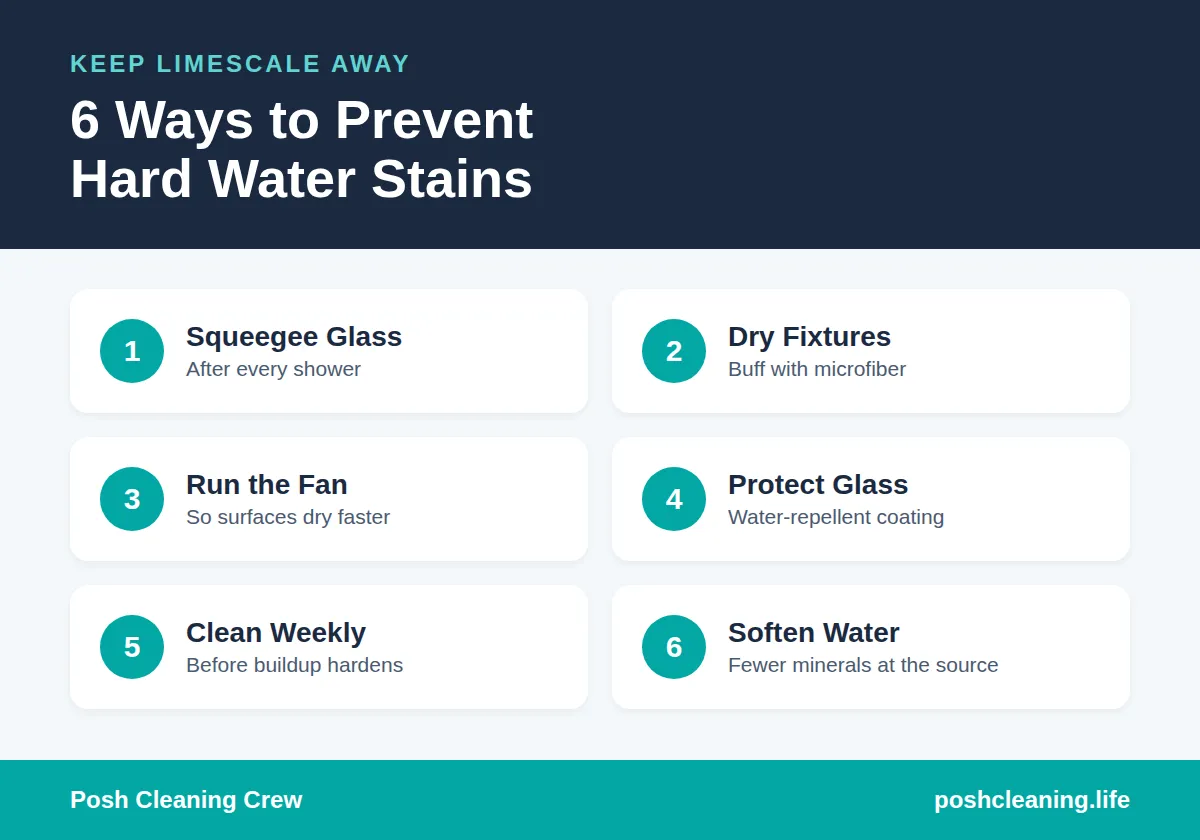
- Squeegee the glass after every shower. It takes about 30 seconds and does more than any cleaner.
- Keep a microfiber cloth by the sink and give the faucet a quick wipe when you’re done.
- Run the bathroom fan during showers and for a while after, so everything dries faster.
- Reapply a glass protectant every few months.
- Do a quick weekly wipe with diluted vinegar on glass and ceramic, before spots have time to harden.
- Look into a water softener if your water tests hard or very hard. It cuts the minerals at the source, which helps every faucet, dish, and appliance in the house.
Get Rid of Stubborn Hard Water Stains with Posh Cleaning Crew
If you’ve tried the vinegar and you’re still staring at cloudy glass, we can help. Posh Cleaning Crew is a woman-owned, veteran-operated cleaning company, and hard water buildup is one of the jobs we do most. We remove the scale, protect the glass, and leave you with a shower that stays cleaner longer.
- Hard water cleaning in Texas (Plano and surrounding areas)
- Hard water cleaning in Pennsylvania (Aston and surrounding areas)
Tired of scrubbing the same spots every week? Request a free quote or call (210) 891-0224.
Frequently Asked Questions
Does vinegar damage surfaces?
Vinegar is safe on glass, ceramic, porcelain, and chrome as long as you rinse it off. It can etch marble and granite, slowly wear down cement grout, and discolor some specialty fixture finishes, so skip it on those.
Are hard water stains permanent?
Usually not. Most hard water stains dissolve with a mild acid like vinegar. The exception is glass that has been left with buildup for a long time, because the minerals can etch it, and etching can’t be cleaned off.
Does a water softener stop hard water stains?
Mostly, yes. A softener removes most of the calcium and magnesium that cause the spots, so new buildup slows way down. It won’t remove the limescale you already have, though. That still needs one good clean.
Is hard water bad for your health?
Hard water generally isn’t considered a health risk. The problems it causes are around the house: crusty fixtures, soap scum, spotty dishes, and appliances that wear out faster.