
Cold fogging is a disinfection method that uses an ultra-low volume (ULV) machine to turn a liquid disinfectant into a fine, room-filling mist without heat. The tiny droplets drift and settle on walls, furniture, and hard-to-reach surfaces that wiping misses. It works best after a home has been cleaned, with a disinfectant labeled for fogging, and with everyone out of the house until the product’s re-entry time has passed.
People usually look into cold fogging after a stomach bug has gone through the family, before moving into a new home, or when a smell won’t go away no matter how much they clean. It can help in all of those situations, but it is not magic, and it only works well when it is done the right way. This guide explains how cold fogging works, how it compares to other methods, what it can and can’t do, and how to prepare your home, so you can decide if it’s right for you.
How Does Cold Fogging Work?
The term “cold fogging” might sound technical, but the process is straightforward and highly effective. The service uses an Ultra Low Volume (ULV) fogger, which takes a liquid disinfectant and atomizes it into a mist of tiny droplets. This creates a “fog” that is light enough to float throughout a room and evenly coat all surfaces.
Unlike traditional spray-and-wipe methods, this fine mist settles everywhere, including:
- Walls and ceilings
- Underneath furniture
- Inside air ducts
- Within carpet fibers and upholstery
This comprehensive coverage is what makes cold fogging a premier home disinfection service. At Posh Cleaning Crew, our process targets and eliminates hard-to-kill viruses, bacteria, mold, and dust mites, ensuring a level of sanitation that conventional cleaning simply cannot match.
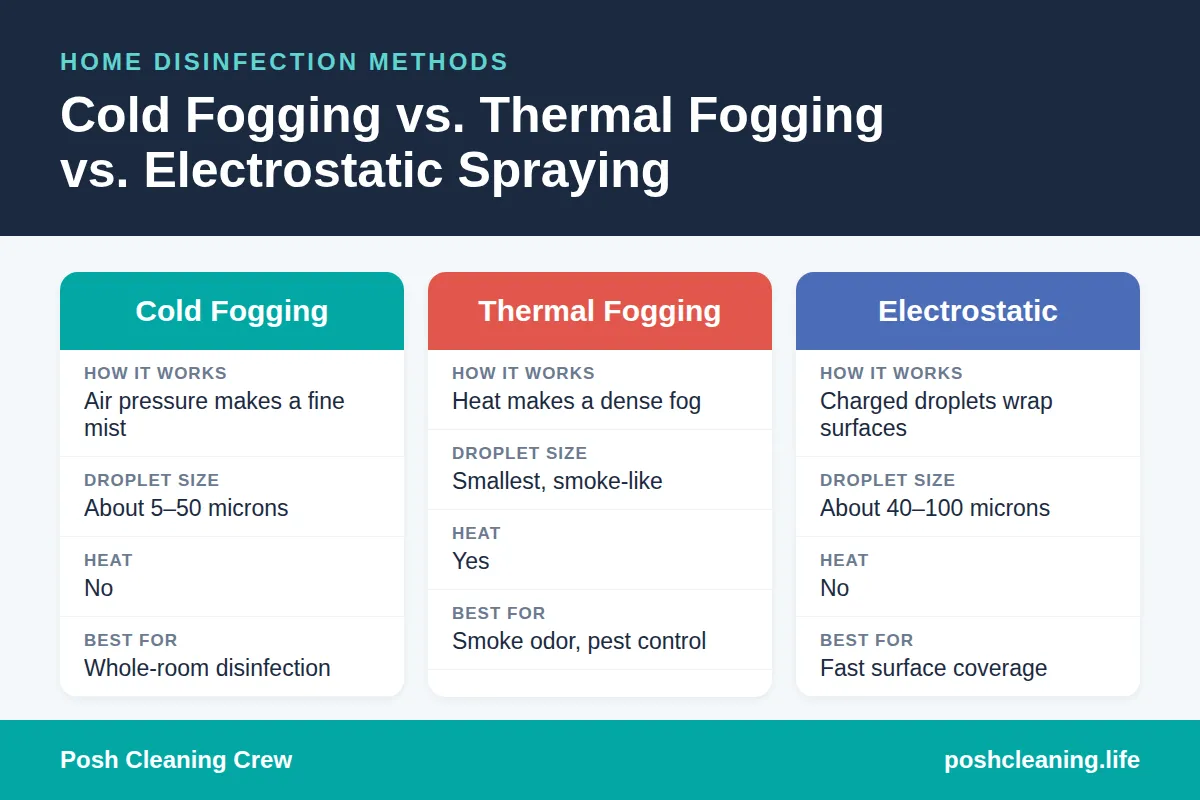
Cold Fogging vs. Thermal Fogging vs. Electrostatic Spraying
These three methods are often mixed up. Here is how they compare for home use:
| Feature | Cold Fogging (ULV) | Thermal Fogging | Electrostatic Spraying |
| How it works | Air pressure breaks liquid into a fine mist | Heat turns liquid into a dense, visible fog | Charged droplets are drawn to surfaces |
| Droplet size | Very small (about 5–50 microns) | Smallest, smoke-like | Larger (about 40–100 microns) |
| Best for | Whole-room disinfection, odor-causing bacteria | Smoke odor and pest control | Fast coverage of surfaces and objects |
| Heat involved | No | Yes | No |
| Common in homes | Yes | Less common indoors | Yes |
For most homes, cold fogging and electrostatic spraying are the practical choices. Cold fogging covers a whole room evenly, while electrostatic spraying is better for targeting specific surfaces quickly.
What Cold Fogging Can Do
When it follows a good cleaning, cold fogging adds a layer of disinfection that is hard to get any other way:
- Reach surfaces you can’t wipe. Walls, ceilings, fabric furniture, and tight spaces all get treated in one pass.
- Reduce germs after an illness. With a disinfectant registered for the germs you are worried about, such as flu, norovirus, or cold viruses, fogging helps reset the home after someone has been sick.
- Tackle odor-causing bacteria. Many lingering smells from pets, mildew, or old food come from bacteria in fabrics and hidden areas. Fogging treats those areas instead of covering the smell with fragrance.
- Save time on large or furnished spaces. A whole room can be treated in minutes, which is why fogging is popular for move-ins and short-term rental turnovers.

What Cold Fogging Can’t Do
Honest providers will tell you the limits too. Knowing them helps you avoid paying for the wrong service:
- It doesn’t clean. Disinfectants work on clean surfaces. Dust, grease, and grime have to be removed first, or the germs underneath are protected. That’s why fogging should follow a thorough deep cleaning.
- It doesn’t fix mold. The EPA notes that killing mold is not enough because dead mold can still trigger allergies, and mold comes back unless the moisture problem is fixed. Visible mold needs to be removed and the leak or humidity solved.
- It doesn’t protect forever. Once people touch surfaces again, germs return. Fogging is a reset, not a permanent shield.
- It doesn’t clean inside air ducts. Ductwork needs its own cleaning service.
- It doesn’t remove allergens like dust and pet dander. Those are removed by vacuuming with a HEPA filter, washing fabrics, and dusting.
When Should You Book Cold Fogging?
Cold fogging makes the most sense in a few specific situations:
- After an illness in the home, once the sick person has recovered and the house has been cleaned.
- Before moving into a new home or apartment, especially if you don’t know how it was cleaned. Pair it with a move-in cleaning.
- When odors keep coming back from pets, smoke, or mildew after regular cleaning hasn’t worked.
- Between guests in a short-term rental, especially after a guest reports being sick.
- Before a newborn, an elderly relative, or someone with a weak immune system moves in or visits.
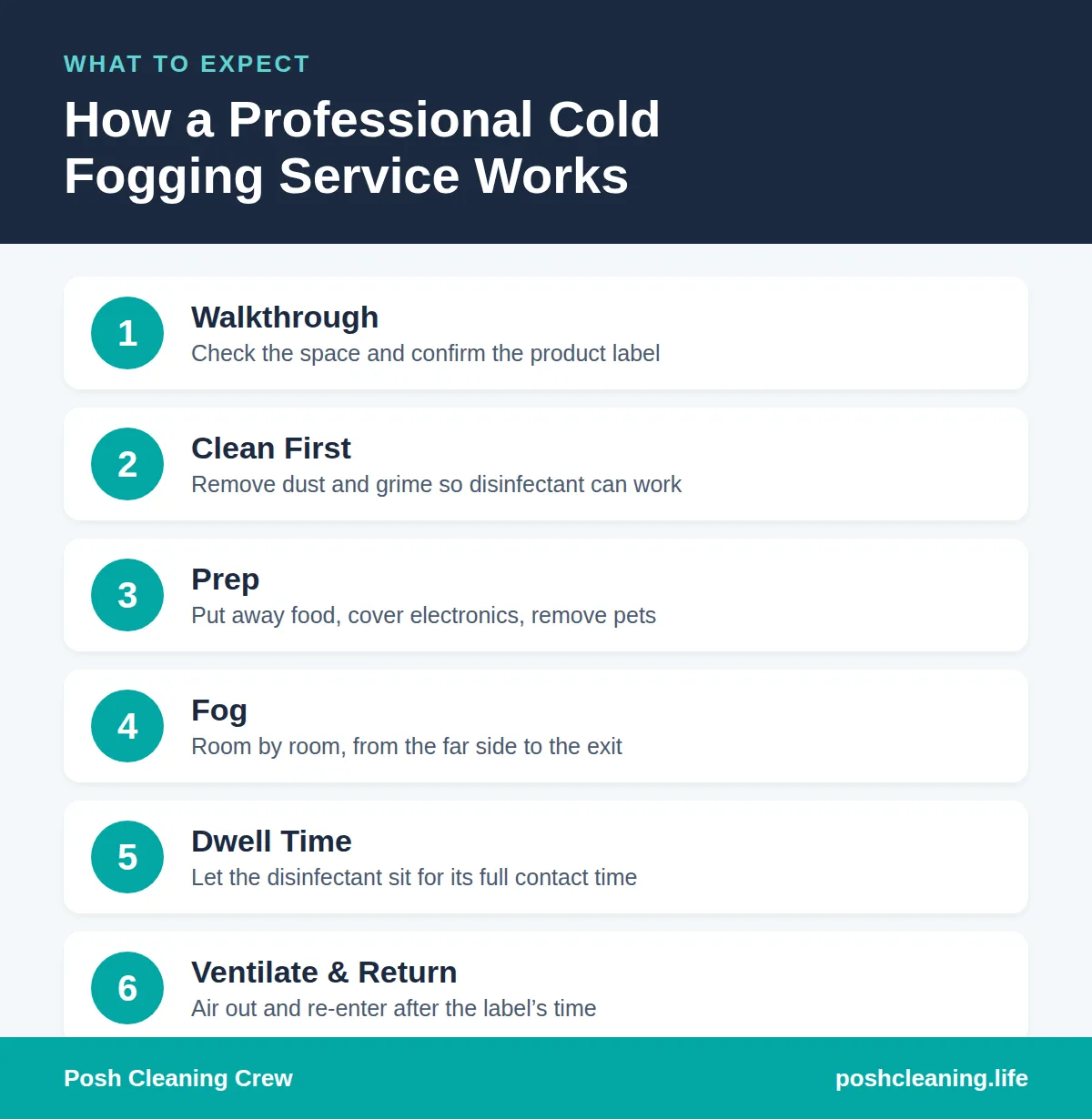
What Happens During a Professional Cold Fogging Service
1.Walkthrough: The technician checks the space, notes sensitive items, and confirms the product and its label directions.
2.Cleaning: Surfaces are cleaned first so the disinfectant can reach the germs.
3.Prep: Food, dishes, toothbrushes, and pet items are put away, and sensitive electronics are covered.
4.Fogging: The technician, wearing protective gear, fogs each room from the far side toward the exit.
5.Dwell time: The house stays closed so the disinfectant can sit for its full contact time.
6.Ventilation and return: Windows are opened and fans run until the re-entry time on the label has passed. Food-contact surfaces are wiped with clean water if the label says to.
How to Prepare Your Home for Cold Fogging
- Put away all food, dishes, utensils, toothbrushes, and baby items, or seal them in cabinets.
- Remove or cover fish tanks and turn off their air pumps. Take pets and plants out of the treatment area.
- Unplug and cover sensitive electronics like computers and gaming consoles.
- Pick up clothes, toys, and papers so surfaces are exposed.
- Plan to be out of the house for the full re-entry time your technician gives you, usually a few hours.
Is Cold Fogging Safe for My Home and Family?
Safety is a primary concern for any in-home treatment. When performed correctly by trained professionals, cold fogging is a safe and reliable way to sanitize your environment.
Is the disinfectant used in cold fogging safe for children and pets?
Yes, when performed by trained professionals, the service is safe for the whole family. Posh Cleaning Crew uses EPA-registered disinfectants that are safe for residential use. To ensure maximum safety, we require that homeowners, children, and pets vacate the premises during the service and for a short period afterward. This allows the mist to settle, dry completely, and work effectively, leaving behind a sanitized and odor-free environment with no harmful residue.
Will cold fogging damage furniture, electronics, or plants?
No, the ultra-fine mist does not saturate surfaces and is generally safe for furniture, fabrics, and electronics. The droplets are so small that they don’t leave a wet residue. However, as a standard precaution, our technicians may advise covering highly sensitive electronic equipment or removing very delicate items and plants from the area being treated to ensure they remain completely untouched.

Professional Home Disinfection vs. DIY Methods
While aerosol disinfectant sprays are readily available, they are no match for a professional cold fogging service. DIY sprays provide limited coverage, only treating the small areas they directly contact. They cannot penetrate deep into fabrics, reach hidden crevices, or provide the long-lasting disinfecting action of a professional treatment. For true whole-house sanitization and odor elimination, professional equipment and expertise are essential.
How Much Does Cold Fogging Cost?
The price of cold fogging depends on the size of the home, the number of rooms, whether a cleaning is needed first, and the reason for the treatment (a routine reset costs less than a heavy odor problem). Many homeowners book fogging together with a deep clean or move-in clean, which is usually more cost-effective than two separate visits. For an exact price, request a free quote.
Book Cold Fogging with Posh Cleaning Crew
Posh Cleaning Crew is a woman-owned, veteran-operated cleaning company that offers cold fogging together with deep cleaning, so your home is cleaned first and disinfected second, the way it should be. It’s a smart choice after an illness, before a move-in, or when stubborn odors won’t go away.
- Cold fogging service in Texas (Plano and surrounding areas)
- Cold fogging service in Pennsylvania (Aston and surrounding areas)
Ready for a cleaner, fresher home? Request a free quote or call (210) 891-0224.
Frequently Asked Questions
Does cold fogging kill mold?
Cold fogging can kill some mold on surfaces, but it does not solve a mold problem. Dead mold can still cause allergies, and mold grows back unless the moisture source is fixed, so visible mold should be removed and the leak or humidity repaired.
How often should you cold fog your home?
Most homes don’t need routine fogging. It is usually done as needed, such as after an illness, before moving in, or to deal with a persistent odor. Short-term rentals and homes with vulnerable family members may book it more often.
Does cold fogging remove odors?
Cold fogging can reduce odors caused by bacteria in fabrics and hidden areas, such as pet or mildew smells. Strong smoke odor or odors from a hidden source, like a leak or dead animal, need the source removed and may need other treatments.
Is cold fogging the same as a bug fogger?
No. Bug foggers release insecticide to kill pests, while disinfectant cold fogging uses a product registered to kill germs. They use different chemicals and should never be swapped.
Is cold fogging worth it?
Cold fogging is worth it when you need to disinfect an entire home quickly and evenly, especially after an illness or before moving in. For everyday cleaning, regular cleaning and disinfecting high-touch surfaces is enough.
———————————————————————————————-